NIPR, NAAIP Forge Alliance to Embed Ethics, Cultural Identity in Nigeria’s AI Future
The Nigerian Institute of Public Relations (NIPR) and the National Association of Artificial Intelligence Practitioners (NAAIP) have established a strategic collaboration aimed at embedding ethical values and cultural relevance into Nigeria’s artificial intelligence ecosystem.
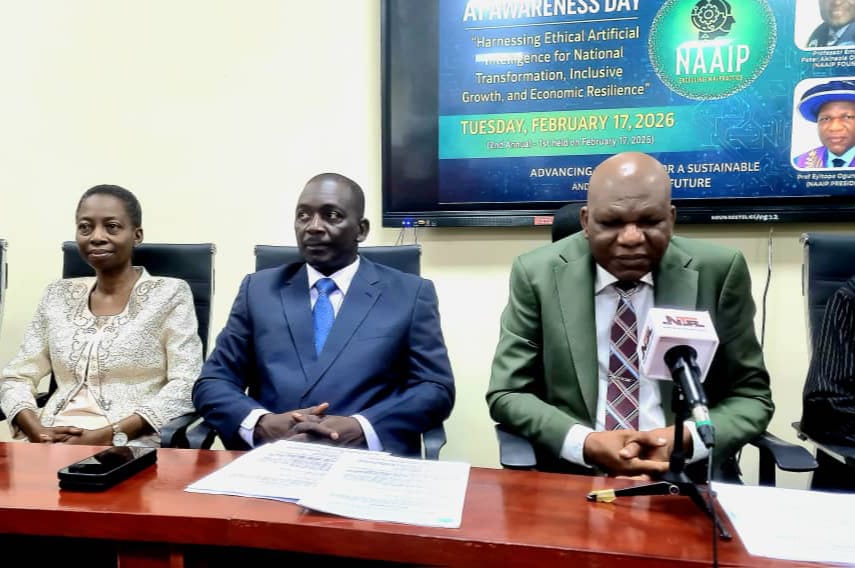
The partnership was formally announced in Abuja on Tuesday during a press conference marking the commencement of the 2026 Artificial Intelligence Awareness Day, themed “Harnessing Ethical Artificial Intelligence for National Transformation, Inclusive Growth, and Economic Resilience.”
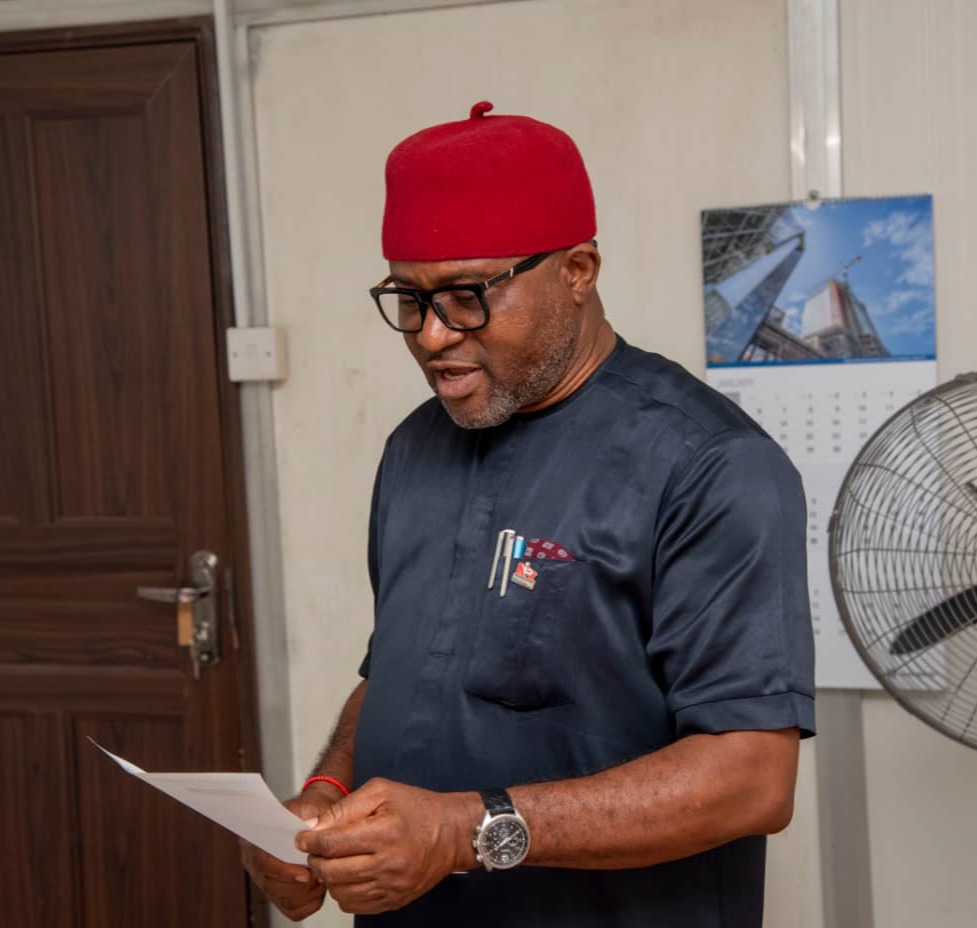
Speaking at the event, the Acting President of NIPR, Professor Emmanuel Samu Dandaura, stated that Nigeria must deliberately mainstream its voice into global AI systems.
According to him, AI models must reflect Nigeria’s cultural realities, languages, social contexts, and value systems if the country is to play a meaningful leadership role in global artificial intelligence discourse.
“We cannot afford to allow machines to redefine humanity in ways that erase our identity,” he said.
He added, “As regulators of reputation and communication management, we are committed to ensuring that artificial intelligence strengthens society without making human values subordinate to algorithms.”
He described NAAIP as one of the most credible bodies of AI professionals in Nigeria, noting that the collaboration would help entrench ethical consciousness across sectors.
Professor Dandaura stressed that NIPR’s involvement in AI governance is rooted in its long-standing commitment to ethics and responsible communication, recalling the Global Alliance AI principles for public relations practice to which NIPR is a signatory.
He further noted that ethics is at the heart of the work of the current Council led by Dr Ike Neliaku. This is illustrated by the theme of the forthcoming World Public Relations Forum 2026 (WPRF), scheduled for November 15-21 in Abuja – "Responsible Communication, Voice of the World”. This reinforces the Institute’s focus on integrity in a rapidly evolving digital age.
On fears that AI will eliminate jobs, he offered a pragmatic perspective: “Artificial intelligence will not replace those who are prepared. Young Nigerians must upgrade their skills, reposition themselves, and tap into the immense opportunities this technology presents. This is where training comes in. It is one area we would synergise with NAAIP."
In his remarks, the President of NAAIP and immediate past Vice Chancellor of Obafemi Awolowo University, Ile-Ife Professor Eyitope Ogunbodede, expressed enthusiasm about the collaboration, describing it as timely and strategic.
He urged stakeholders across government, academia, and the private sector to embrace shared responsibility in shaping Nigeria’s AI trajectory.
“The promise of AI can only be realised through coordinated action and visionary leadership,” he said.
Professor Ogunbodede painted a practical picture of what AI-driven governance could look like in Nigeria: Intelligent traffic management systems in Lagos and Abuja that adapt in real time to reduce congestion, AI-powered predictive maintenance for the national power grid to prevent costly failures, as well as Data-driven planning and budgeting systems to enhance transparency and accountability
“This is not science fiction,” he emphasised. “This is the practical application of AI that can strengthen infrastructure, improve public service delivery, enhance governance, and optimise national planning.”
The NIPR–NAAIP partnership is viewed as a decisive shift in Nigeria’s AI conversation, from passive consumption to proactive leadership. Both bodies made it clear that the future of artificial intelligence in Nigeria must be ethical, inclusive, and truly Nigerian.